Kylie in Williamstown

Last year I was invited to contribute to something a bit out of my normal wheelhouse: an anthology of writings based on the songs of Kylie Minogue.

I have written about songs a few times before, most notably on the excellent Stereo Stories website which has a focus on music and memoir. But this was my first time contributing to an anthology of writings on music.

The book, Spinning Around: the Kylie Playlist, edited by Angela Savage and Kirsten Krauth, was published by Fremantle Press. It includes short stories, poems and creative non-fiction by authors including Christos Tsiolkas, Alice Pung, Kris Kneen, Carrie Tiffany, Chris Flynn, Thuy On, Holden Sheppard, Ellen van Neerven and a host of others. Each piece is based on a song from Kylie’s long and eventful career.

While some authors got to choose their own song, I was allocated one. On the basis of my interest in fonts and typography, Angela kindly decreed that I should write on one of Kylie’s least well-known but most intriguing songs: German Bold Italic (GBI). In this number from 1997 – co-written and produced by Japanese producer Towa Tei – Kylie takes on the persona of a typeface. The story of how the song came to be written and recorded is fascinating, as I describe in my contribution to the book, and demonstrates Kylie’s capacity for experimentation.

Towa Tei was one of the most interesting producers/artists of the time, but far from a household name: Kylie sent him a fax (it was the 90s) reading ‘Music With You? Call Me. Kylie.’ A number of great tracks came out of that collaboration, but they didn’t end up on Kylie’s albums, as her record company didn’t like them. They are well worth seeking out, though, as is the book. (Once you’ve heard it, I defy you to get the synth hook from ‘German Bold Italic’ out of your head.)

Now, if you want to hear some of the pieces from the book read out live, you have the opportunity at the forthcoming Williamstown Literary Festival 2025.

On Friday evening 20 June, the popular Stereo Stories event will include Nathan Curnow reading his Kylie-inspired poem, ‘Confide in Me’ (contributor Alice Pung will also be reading, though not her Kylie work). Details/tickets here:

https://events.humanitix.com/stereo-stories?hxchl=hex-pfl

On Saturday evening 21 June, there will be a Kylie dance party at the Newport Bowls Club. Opening with readings from Miriam Sved, Thuy On, Chris Flynn and Angela Savage, the floor will then be cleared for a dance. Details/tickets here:

https://events.humanitix.com/spinning-around?hxchl=hex-pfl

Ghost signs

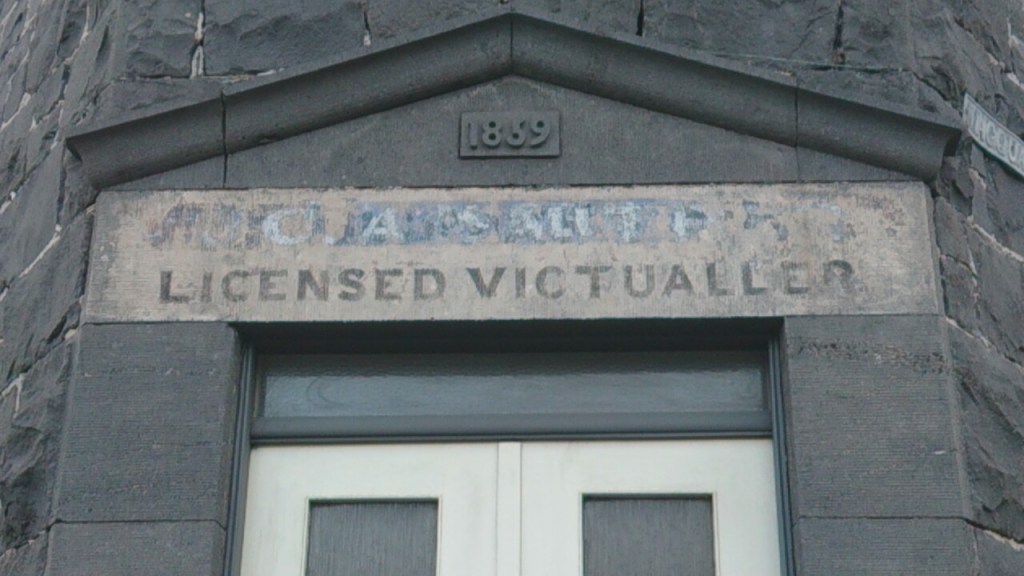
Meanwhile, in other non-Kylie news, also at the Willy Lit Fest, at 4.30 on Saturday 21st June I will be interviewing Sean Reynolds about his book Ghost Signs and old advertising signs painted on walls. Details here (search for ghost signs): https://www.willylitfest.org.au/2025-program
Music and memoir and magic: Stereo Stories

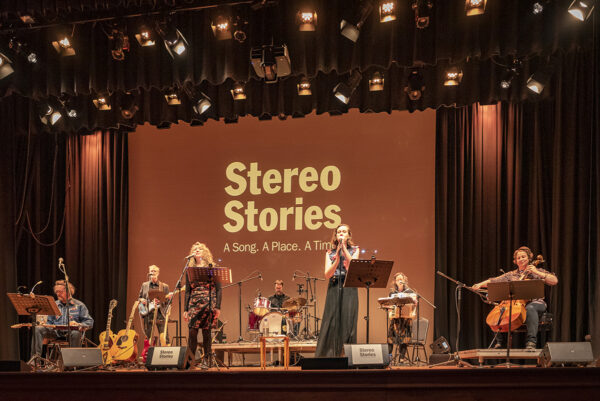
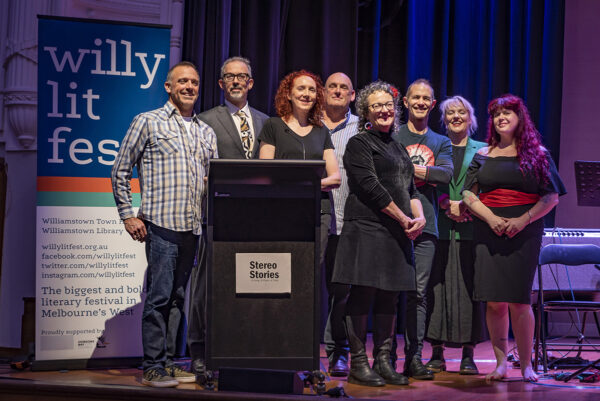
On Friday evening, June 16th I shared the stage of Williamstown Town Hall with a group of wonderful writers and musicians as part of the 2023 Stereo Stories concert.

Stereo Stories, the brainchild of Williamstown writer Vin Maskell, is a simple but brilliant concept: each writer contributes a piece of memoir about a song that has been important in their life, specifying a time and a place; they read the story accompanied by the Stereo Stories band which plays the song, weaving the music in and out of the words.

Photo: Eric Algra

Part of what makes the event so appealing is that writing is usually a solitary pursuit, unlike music which is a collective endeavour. I’ve always felt envious of musicians who have the talent and opportunity to create something great together. Thanks to Stereo Stories I have to opportunity to feel what that is like, if only for a few minutes..

I’ve been lucky enough to be part of half a dozen Stereo Stories events now, including at Mildura and Williamstown Literary festivals, but this was certainly the biggest – with an audience of 400 or so – and perhaps the best. The band is a versatile, talented and tight outfit that switches effortlessly between genres from rock to new wave to gospel to Icelandic punk. And the stories were equally diverse.

Guest writers pre-show: Jock Serong, Nick Gadd, Katherine Kovacic, Smokie Dawson, Angela Savage, Andy Griffiths, Jacinta Parsons, Rijn Collins. Photo: Eric Algra.

Jock Serong told a story worthy of one of his own novels, of his younger self travelling in South America being held up at gunpoint and fleeing for his life with Nirvana ringing in his ears. Angela Savage gave us a touching reminiscence of her late father’s love for The Rhythm of Life. Katherine Kovacic took us to Antarctica, Rijn Collins to Iceland, Vin Maskell to Moggs Creek, and Andy Griffiths into his own strange and fertile adolescent brain, in which he was a surfing rock god.

My own story was a riff on ‘Once in a Lifetime’ by Talking Heads, which was one of the first songs – I was about 15 at the time – that gave me a sense of other worlds and other ways of living, and showed me that music was a way into finding them. A big part of the song’s appeal was David Byrne’s frenetic performance in the video, which I attempted to evoke in my performance of the story (you can read it on the Stereo Stories website).

A glorious night, which I hope to be part of again.

Willy Lit Fest: Back to where it all started

In June at the Williamstown Literary Festival I’ll be running a session about the Melbourne Circle project, the two-year walk I undertook with my late wife Lynne that resulted first in a blog and then my memoir Melbourne Circle: Walking, Memory and Loss. This will be a welcome opportunity to return to the place where it all started. 

The Melbourne Circle project was a series of connected walks which took place over a two-year period. The original motivation was a sense of curiosity: we had lived in Melbourne for more than 20 years, but how well did we really know it? We decided to find out by walking. Beginning in Williamstown, at Gem Pier, Lynne and I would set off on weekly walks, looking for anything that interested us: old buildings, weird signs, quirky architecture, murals and other traces of the past.

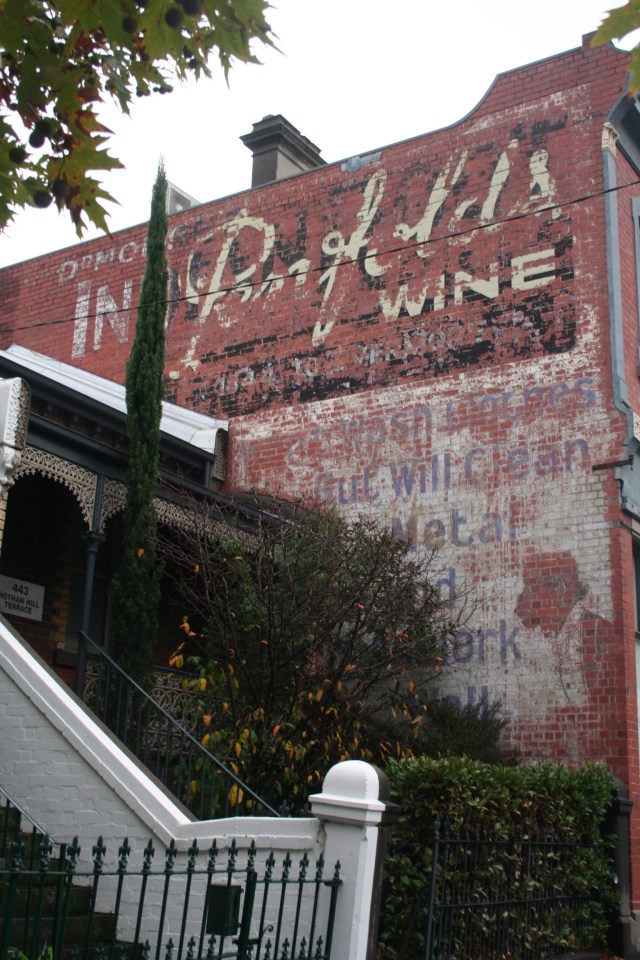
We were not interested in important monuments or tourist attractions: we were drawn to things that were ordinary, and which pointed to the layered stories of the city. A perfect example is ghost signs: those old painted signs for vanished people, shops, products, businesses and social movements (Robur Tea, Ecks Lemonade, Electrine Candles, Champion football boots to name but a few) which linger on walls across Melbourne.

The rule that we set for ourselves was that every walk had to begin where the last one finished. Aside from that, we would walk wherever we liked, following our instincts and our noses. Over the two years, our 60 or so walks gradually formed a big wiggly circle around the whole city, taking in some 40 suburbs. The walk ultimately concluded with a ferry ride back across the bay from Port Melbourne to Spotswood, from where we returned to our original starting point at Gem Pier.

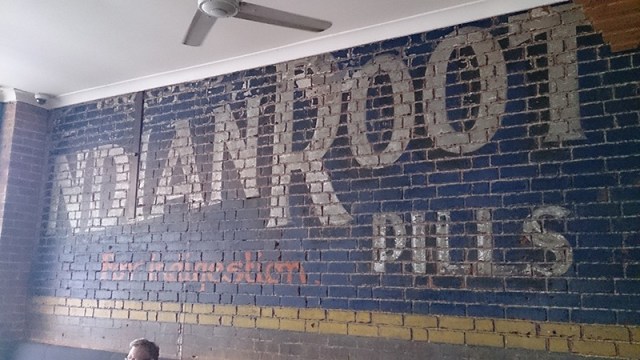
During the walk we observed many examples of loss and change in the suburbs we walked through. We also felt a sense of connection with the people who had lived there and walked those streets before us. After the walks I would track down more information about the things we had seen. It was thus that we learned aspects of Melbourne’s history that were unknown to us, such as the important role once played by ‘friendly societies’ like the Rechabites (whose name lingers on a building near Vic Market); the incredible story of the lost greyhound racing track of Sunshine, where monkeys once rode on the backs of dogs; and the curious case of Dr Morse, whose ‘Indian Root Pills’ are still advertised on walls in North Melbourne and Richmond. Environmental stories were not neglected: we learned about the forest of mangroves that grows under the West Gate Bridge, and the ‘pink lake’ of Westgate Park. I told many of these stories in my blog, which in turn attracted comments and stories from many readers who wanted to share their own memories of Melbourne.

In 2018 I experienced loss on quite another level when Lynne, my partner of 30 years, died of cancer. After her death, partly to help me manage my grief,  and in an attempt to create something positive from a time of darkness, I wrote a book, Melbourne Circle: Walking, Memory and Loss, which described our walks and delved into the story of our lives together in the city. Walking had been a vitally important part of our relationship and in writing the book I found comfort in remembering the time we had shared exploring the suburbs together. In the process of writing, I wove our story into the many others we had encountered.

As it happened, when the book was published Melbourne was in one of its lockdowns and its citizens were unable to venture more than 5km from home. During this period a lot of us rediscovered the pleasures to be gained from exploring our own neighbourhoods on foot. There is a lot to see when you go on a walk and open your eyes, even in neighbourhoods that we might think are too familiar or ordinary to hold surprises. I hope this is a habit that will continue, even though lockdowns and restrictions are a thing of the past. Melbourne Circle unexpectedly became a kind of guide for people who wanted to explore their own neighbourhoods.

At the Willy Lit Fest on 17 June at 1.30pm I will take a group on a short walk to some locations in Williamstown that Lynne and I visited, read a few of my favourite stories from the walk, and discuss memory, loss, and sense of place. If you’d like to join me, please book via the Festival website.

The Museum of Loss and Renewal

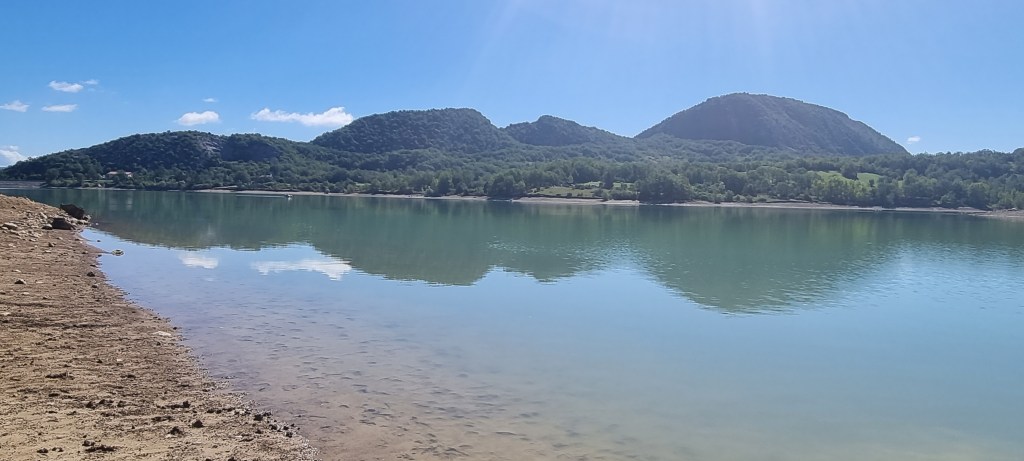
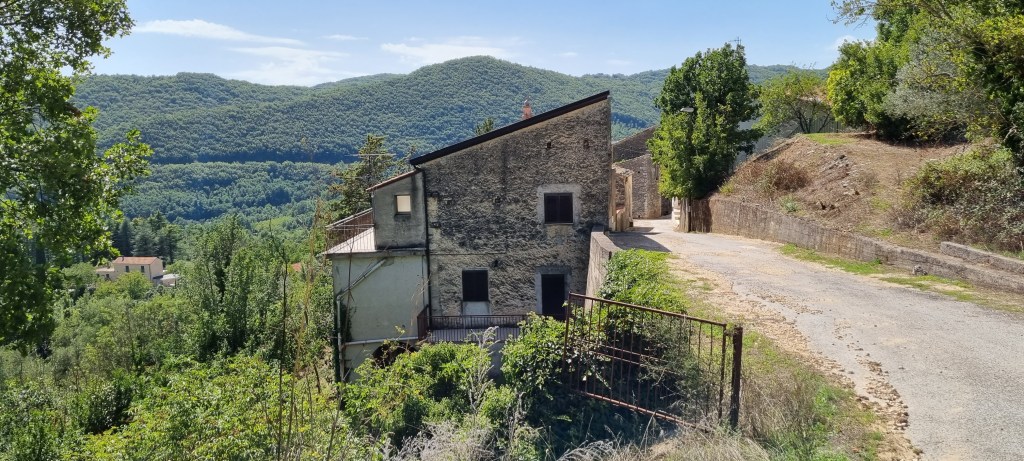
In September 2022 I had the privilege of spending a month in residence at The Museum of Loss and Renewal in the village of Collemacchia, Italy. The Museum of Loss and Renewal is a cultural project run by Edwin Janssen and Tracy MacKenna, artists and curators who have established a residency program to enable artists and writers to take the time to “generate thoughts, feelings and ideas” in Collemacchia. The village is in Molise in southern Italy, and is part of a mountainous region of great natural beauty which is not much known and visited, including by Italians.

What attracted me to the residency initially was its name: my own recent work, especially Melbourne Circle and my other ventures into psychogeography, has engaged with loss and renewal as key themes. Also, there was the appeal of returning to Italy, where I had lived as a young man more than 30 years ago. When I arrived at the place and began to explore, I discovered that it was an ideal place for investigating these themes in slightly different ways.

The village is very small in terms of population: only a few dozen people, and a large number of feral cats, populate it for much of the year, although more people return during the summer.

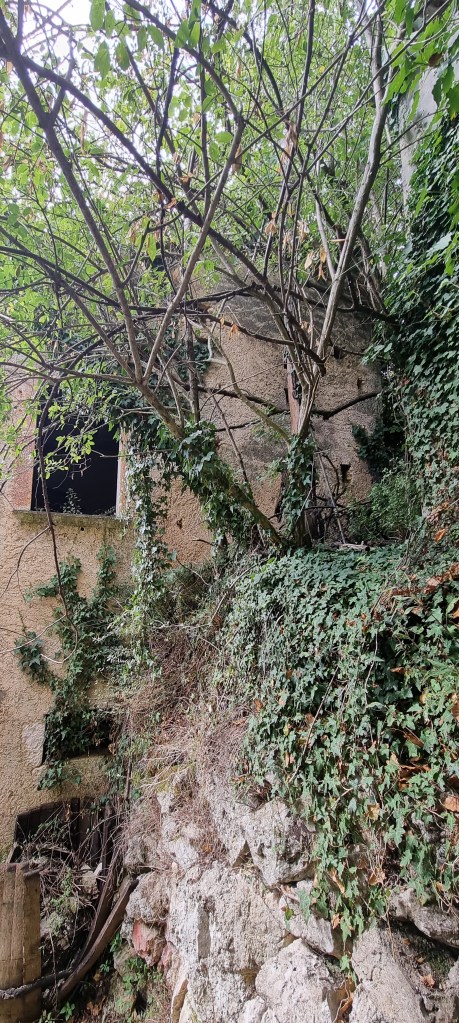
It all looks undeniably romantic and picturesque to the outsider, but this is an agricultural area which has lost much of its population over the past hundred years or so. Around the village you often come across empty houses with ‘for sale’ signs, some of which look abandoned, with crumbling walls and holes in the roofs. The hills around here used to be extensively cultivated, as you can tell from the dry stone walls which divide the hills into terraces on which people grew grapes and figs, walnuts and apples, and kept a few livestock. But now most of those small farms have gone – though a few survive – the walls are overgrown and crumbling, and you can freely pluck ripe figs from the trees, and apples and grapes, because no one is harvesting them. The area is rewilding, as part of a process known as ‘old field succession’. Nature reclaims the land, as people abandon the farms and flock to the cities – a trend happening in many parts of the world. I’ve always been an urban guy, but I found it intriguing and moving to be in this formerly agricultural area, and observe its transition back to wildness.

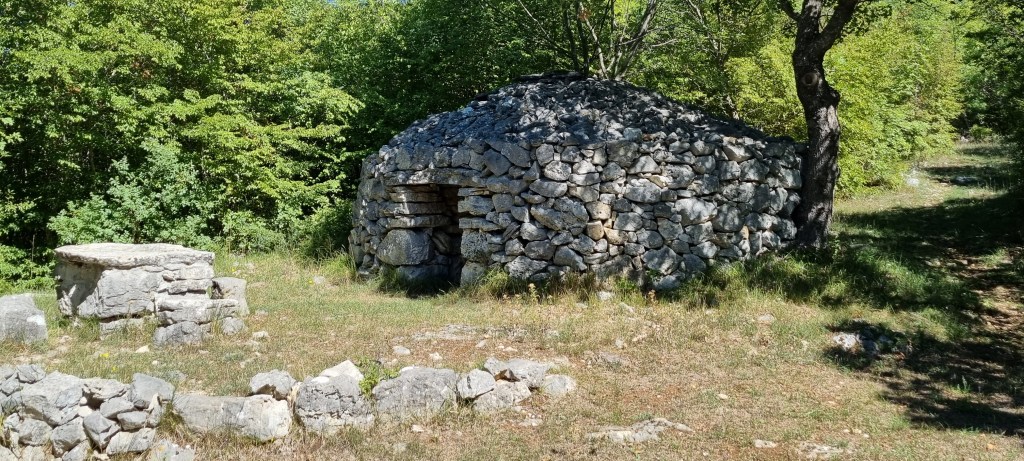
There are other traces of the past around these hills. Not far up the hill from the village is an old well, said to be Roman. Twenty minutes walk away, along a winding path that leads you on a circuitous route through trees and rocks and brambles, you find a medieval ossuary where the bodies of victims of the Naples Plague were disposed of, then walled up: peering down through a hole in the roof, I saw bones below. Less macabre are the little stone huts, known as ‘capanne’ which you come across here and there as you wander, built over past centuries as shelters for people out on the hills in foul weather. And everywhere you come across shrines, with plaster saints or Jesus himself gazing out from holes in the walls among the trees or beside the road.

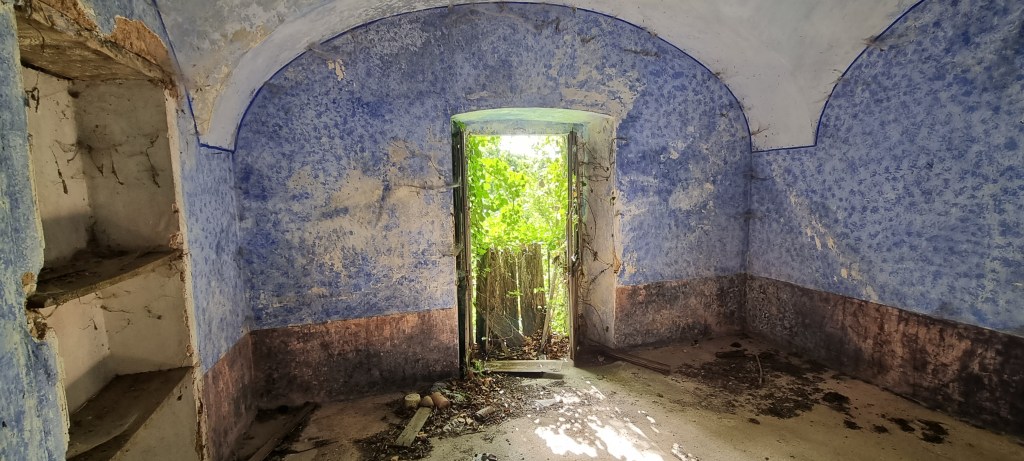
On one occasion Edwin took me and fellow residents on a walk though the hills to an empty house which is an absolute gift to anyone with a taste for hauntology. Abandoned some time in the late 20th century, we think, it is engulfed with foliage, trees are growing through its walls, while birds and bats flit through the holes. Inside walls are painted powder blue, but the ceiling is a pale ocean with continents of dark green mould, and much of the plaster has crashed to the floor around the wreck of a washing machine. Light falls through a curtain of leaves around an empty doorway. And in the bedroom is the putrid corpse of a bed in a state of advanced decomposition. Wandering though the abandoned house – abandoned by its owners, anyway, though still very much occupied by other lifeforms – encouraged reflections on the transience of human activities: one day all our cities will be like this, but nature will continue. It that sense, the house is an embodiment both of loss and of renewal. A little bat on the ceiling glared at us, perhaps aware that his species has been around for millions of years longer than ours and expects to be here long after we’ve wiped ourselves out.

Being in such a layered and complex setting – and in four weeks I hardly had time to scratch the surface of it – was stimulating for my writing, and I did get some work done, supported by the always encouraging presence of Edwin Janssen. Hopefully some of the essays and fiction I worked on will see the light of day at some stage. I’m sure I will retain Collemacchia as part of my mental landscape and I am glad and grateful that I had the opportunity to visit. Any artist or writer with an interest in the kind of themes I’ve referred to would benefit from a residency at The Museum of Loss and Renewal, and I hope to return myself one day before too long.

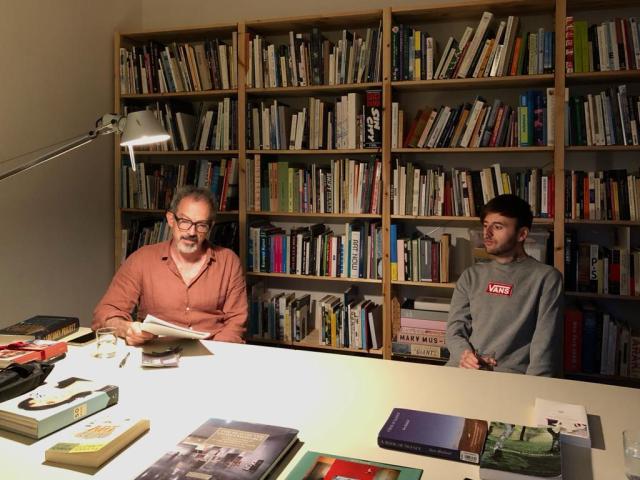
Giving a reading in the library at The Museum of Loss and Renewal.

Talking psychogeography on Life Matters

I had a lovely conversation with Hilary Harper on Radio National’s ‘Life Matters’ program about walking the streets of Melbourne with my late wife, Lynne.

On our two-year walk around and through the suburbs of Melbourne, Lynne and I described a kind of wobbly circle, beginning in Williamstown, passing through 50 or so suburbs on foot and ending up in Port Melbourne – from where we took a ferry back to our starting point.

On the way we discovered ghost signs, fascinating old buildings and remarkable stories and characters from Melbourne’s past – including the strange tale of the monkey jockeys of Sunshine Road.

Not long after the journey finished, Lynne died of cancer. My book Melbourne Circle: Walking, Memory and Loss is the story of our journey and a memoir of our life together in Melbourne.

Listen to the audio of the interview here.

You can buy the book Melbourne Circle: Walking, Memory and Loss (published by Australian Scholarly Publishing) here, here, here or ask at your local bookshop.

Melbourne Circle book published in December

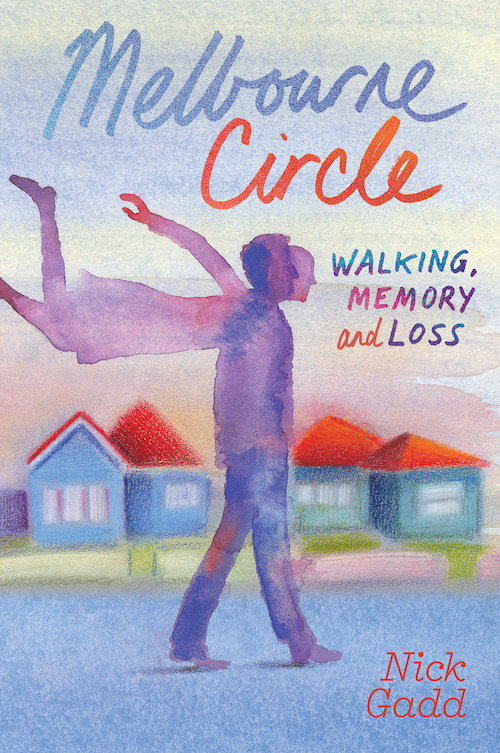
My new book Melbourne Circle: Walking, Memory and Loss was launched on 3 December 2020.

You can buy the book here, here, here or ask at your local bookshop.

The cover art, by the Melbourne artist Jim Pavlidis, captures exactly what I am trying to express in the book: the sense of magic and mystery that exists in ordinary suburban streetscapes, and the way we carry our own histories with us as we walk.

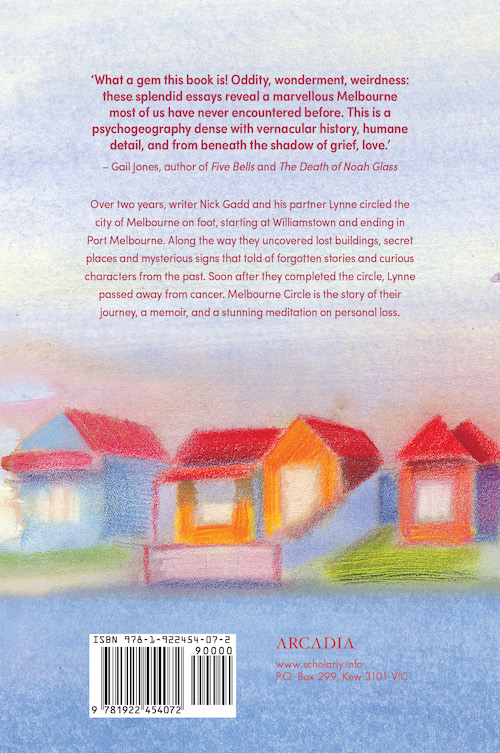
The book is based on a series of walks my wife Lynne and I took in 2014-2016, which together formed a big circle around Melbourne. During our journey on foot, which passed through some 50 suburbs, we encountered ghost signs, derelict buildings and lost places, and uncovered countless forgotten stories from the past. I wrote a blog about these walks, titled Melbourne Circle.

In 2018, I experienced another kind of loss when Lynne died of cancer. Writing the book about our walks became a way not just of exploring the history of Melbourne but of coping with my grief by telling our story. The book is a personal memoir as much as it is travelogue or social history. In addition to some sections which originated as blog posts, the book reflects on how our lives unfolded in the Melbourne suburbs, and how we built meanings together through our relationships with these places.

As the title suggests, the themes are loss, memory, connection to place, and regeneration. The implicit argument of the book is that connection with place is a key to the meanings of our lives.

Melbourne Circle: Walking, Memory and Loss is published by Arcadia, an imprint of Australian Scholarly Publishing.

Ned Kelly Awards shortlist

The shortlists for the 2020 Ned Kelly Awards have been announced and I’m absolutely stoked that my font-based mystery, Death of a Typographer is on the shortlist for best Australian crime novel of the year. The judges described it as a ‘quirky and original story which is funny and very Melbourne’. Thank you very much!

The Australian Crime Writers Association does a great job of promoting Aussie crime writing through the Ned Kelly Awards every year. The last time I was involved in the Neddies was in 2009, when my first novel Ghostlines won the award for best debut crime novel.

The full shortlist in this category is:

  • Nick Gadd, Death of a Typographer (Australian Scholarly Publishing)
  • Pip Drysdale, The Strangers We Know (Simon & Schuster Australia)
  • Dervla McTiernan, The Scholar (Harlequin Enterprises Australia)
  • Christian White, The Wife and the Widow (Affirm Press)
  • Dave Warner, Rivers of Salt (Fremantle Press)
  • David Whish-Wilson, True West (Fremantle Press)

I think the announcement of the winner might be some time in October.

Here are the shortlists in the other categories.

If you would like to buy Death of a Typographer, and/or Ghostlines, please click here.

Here’s a cool little video of the shortlists:

Australian Book Design Awards – cover of the year!

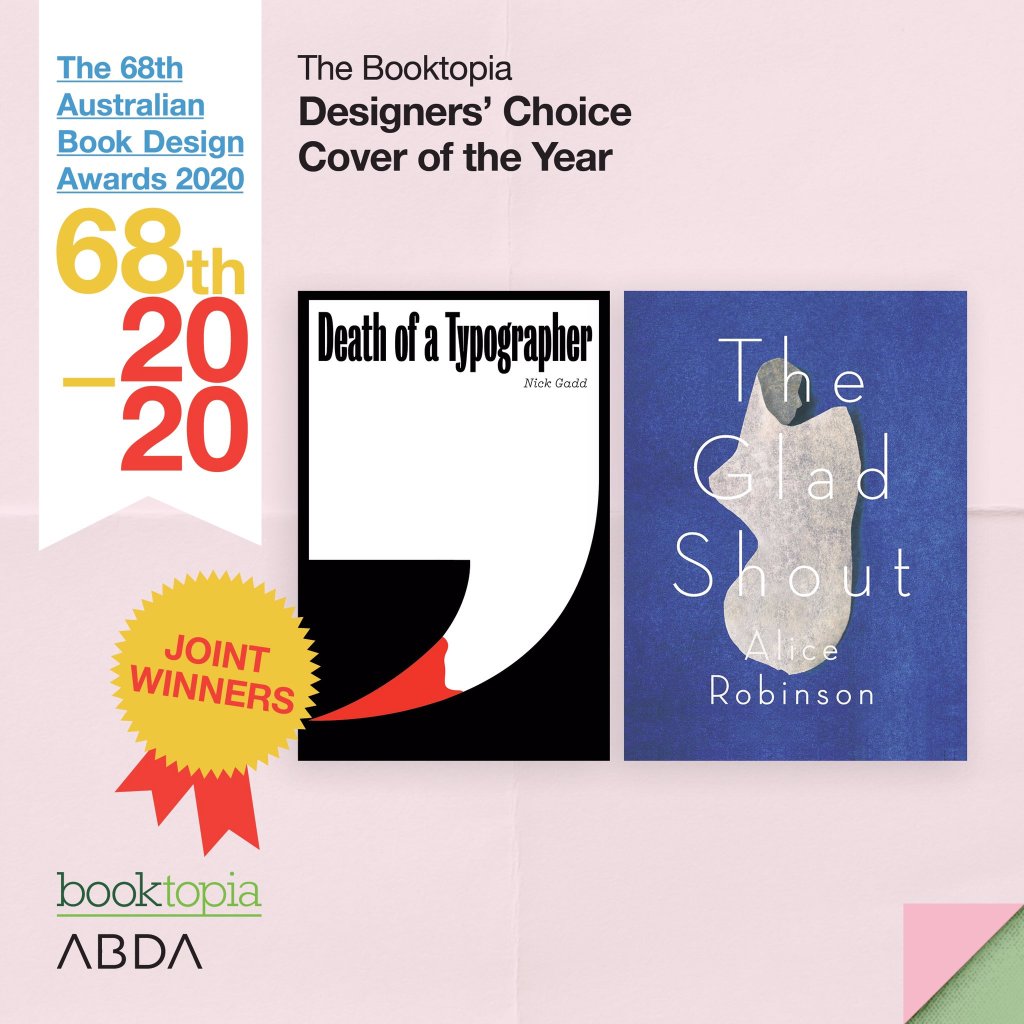
I was absolutely thrilled when Stephen Banham won the Designers’ Choice Cover of the Year award at the 2020 Australian Book Design Awards for his brilliant, witty design for Death of a Typographer.

The Cover of the Year Award was shared between two books: Death of a Typographer and The Glad Shout, designed by Jenny Grigg.

The moment I saw Stephen’s design for the first time in a Carlton cafe back in mid-2019, I knew he had nailed exactly the vibe I was looking for. The design is clever, original, and striking, showing a stylish blood-stained punctuation mark.

Stephen was really the only person who could have designed this novel. Not only is he a typographer, graphic designer and font expert, he is also a good friend, and my conversations with Stephen inspired the novel in the first place. It was from Stephen that I first learned that there is such a thing as font crime, what kerning means, and the difference between a glyph, a ligature and a swash.

Stephen also designed the internal pages of the book, creating a special divider page at the start of each chapter in a different font, with the selected typeface reflecting the content of the chapter. Among the fonts he selected (all listed at the back, for the enthusiast) are Peignot (for a chapter set in a French bar), Underground (set in London), and the hideous Graveblade (in which the arch-villain finally appears).

Stephen has also recently designed a new cover for my first novel, Ghostlines, which first appeared in 2008, and has just been republished in a new edition.

Both novels are available from your local bookshop or from Australian Scholarly Publishing.

Stephen’s design studio is Letterbox.

Ghost signs on Channel 9

This clip recently appeared on the Channel 9 news in Melbourne. It features me talking to reporter Tony Jones about some of the little-known stories behind old Melbourne signage.

Some of these signs are described in more detail on my blog Melbourne Circle, and in the forthcoming book Melbourne Circle: Walking, Memory and Loss.

https://platform.twitter.com/widgets.js

Some of the ghost signs that appear in this clip:

Penfolds wine/Monkey Brand Soap/Dr Morse’s Indian Root Pills – Abbotsford St North Melbourne

Maison Marney Brandy – Canning St North Melbourne

Cinzano – Buckley St, Footscray

Alex Barfoot shoe repairs – Little Collins St, Melbourne

L. W. Holmes paperhanger – Glenferrie Rd, Malvern

Capstan cigarettes/Temple Bar – Stephen St, Yarraville

Family chemist/Palcolor – Ballarat St, Yarraville

J. King … self raising – Cecil/Bank St, South Melbourne

Wines and Spirits – Epsom Road, Kensington

Robur tea / Bushells tea – Park St, Carlton North

Greys – Arden St, North Melbourne

Atco Jeep etc – Macaulay Rd, North Melbourne

Melbourne Circle: the book

Melbourne Circle: Walking, Memory and Loss was published in December 2020. It is an account of a journey on foot around Melbourne in the years 2014-16 which I made with my late wife, Lynne. On the way we observed ghost signs, derelict buildings and lost places, and we uncovered countless forgotten stories and characters from the past.

In 2018, I experienced another kind of loss when Lynne died of cancer. Writing the book about our walks became a way not just of exploring the history of Melbourne but of coping with my grief by telling our story. Melbourne Circle is a personal memoir as much as it is travelogue and social history. In addition to weird and wonderful stories of how past Melburnians lived (monkey jockeys, anyone?) the book reflects on how our lives unfolded in the Melbourne suburbs, and how we built meanings together through our relationships with these places.

As the title suggests, the themes of the book are loss, memory, connection to place, and regeneration. All of this adds up to what I understand as ‘psychogeography’, meaning a recognition of our connection with place as a key to the meanings of our lives.

You can buy the book here, here, here or ask at your local bookshop.

Here is the audio of my interview about the book with Hilary Harper on Radio National.

You can check out my original blog, Melbourne Circle, here.